If You Suspect Imminent Danger from Flooding or Debris Flow...
Body
1. Get out now!
2. Contact local fire, police, or public works department.
3. If possible, inform affected neighbors.
Safety During a Storm
Body
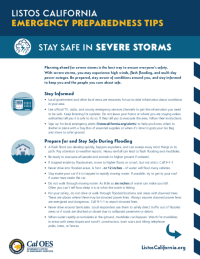
Planning ahead for severe storms is the best way to ensure everyone’s safety. With severe storms, you may experience high winds, flash flooding, and multi-day power outages. Be prepared, stay aware of conditions around you, and stay informed to keep you and the people you care about safe.
Local government and other local news are resources for up-to-date information about conditions in your area.
Use official TV, radio, and county emergency services channels to get the information you need to be safe. Keep listening for updates. Do not leave your home or where you are staying unless authorities tell you it is safe to do so. If they tell you to evacuate the area, follow their instructions.
Sign up for local emergency alerts (AlertOC) to help you know when to shelter in place with a Stay Box of essential supplies or when it’s time to grab your Go Bag and move to safer ground.
Links in this section relate to Body
Body
When thunder roars, go indoors! Move from outdoors into a building or car with a roof.
If Outside: Go inside a sturdy building immediately if severe thunderstorms are approaching. Sheds and storage facilities are not safe. Taking shelter under a tree can be deadly. The tree may fall on you. Standing under a tree also put you at a greater risk of getting struck by lightning.
In a Vehicle: Being in a vehicle during severe thunderstorms is safer than being outside; however, drive to closest secure shelter if there is sufficient time.
Pets: If time allows, take your pets with you inside or secure larger animals in a safe, enclosed area.
Pay attention to alerts and warnings.
Unplug appliances and avoid using electronic devices connected to an electrical outlet.
Avoid running water or using landline phones. Electricity can travel through plumbing and phone lines.
Turn Around. Don’t Drown! Do not drive through flooded roadways. Just six inches of fast-moving water can knock you down, and one foot of moving water can sweep your vehicle away.
For more information, review the following in-language Safety During Severe Storms fact sheets:
Vietnamese-language fact sheet
Links in this section relate to Body
Body
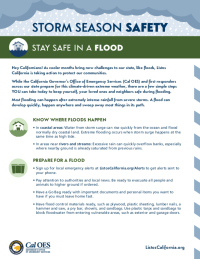
A flash food can develop quickly, happen anywhere, and can sweep away most things in its path. Pay attention to weather reports. Heavy rainfall can lead to flash flooding and mudslides.
Be ready to evacuate all people and animals to higher ground if ordered.
If trapped inside by floodwaters, move to higher floors or a roof, but not attics. Call 9-1-1.
Never drive into flooded areas. A foot – or 12 inches – of water will float many vehicles.
Stay inside your car if it is trapped in rapidly moving water. If possible, try to get to your roof if water rises inside the car.
Do not walk through moving water. As little as six inches of water can make you fall. Often you can’t tell how deep it is or what the water is hiding.
For your safety, do not drive or walk through flooded locations and areas with downed trees. These are places where there may be downed power lines. Always assume downed power lines are energized and dangerous. Call 9-1-1 to report downed lines.
Never drive around barricades. Local responders use them to safely direct traffic out of flooded areas or if roads are blocked or closed due to collapsed pavement or debris.
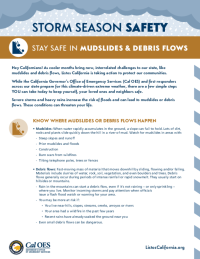
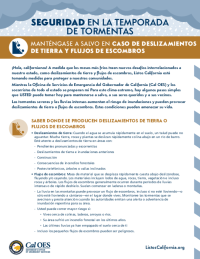
When water rapidly accumulates in the ground, mudslides can happen. Watch for mudslides in areas with steep slopes and runoff, construction, burn scars and tilting telephone poles, trees, or fences.
For more information, review the following in-language Safety During a Flood fact sheets:
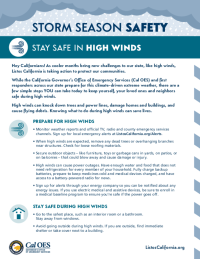
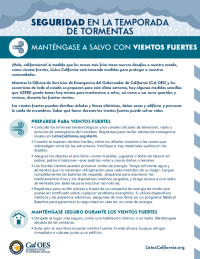
When high winds are expected, remove any dead trees or overhanging branches near patios, sheds, or other structures; loose roofing materials; and objects in yards, under patios, on roofs, or on balconies that could blow away.
Before a storm, secure outdoor objects such as lawn furniture or garbage cans that could blow away and cause damage or injury.
If you are driving in high winds, slow down! Keep a safe distance from vehicles in lanes next to you and watch for objects blowing across the road.
If you are outside during high winds, find shelter immediately. Stay away from trees and power lines, and watch for flying debris.
Watch out for downed power lines during high winds. Never touch or drive over a fallen power line. If a power line falls on your vehicle, call 911 and stay inside until trained personnel can remove it.
For more information, review the following in-language Safety During High Winds fact sheets:
Listen to local news stations on a battery-powered radio for warnings.
Always follow the instructions from local emergency managers. They provide the latest recommendations based on the threat in your community.
Stay alert and awake during a storm that could cause a landslide. Many deaths from landslides occur while people are sleeping.
Be aware that by the time you are sure a debris flow is coming, it will be too late to get away safely.
Never cross a road with water or mud flowing.
Never cross a bridge if you see a flow approaching because it can grow faster and larger too quickly for you to escape.
If you do get stuck in the path of a landslide move uphill as quickly as possible.
Avoid river valleys and low-lying areas during times of danger.
If you are near a stream or channel, be alert for any sudden increase or decrease in water flow or water that changes from clear to muddy. These can be signs that a landslide is coming.
For more information, review the following in-language Safety During Mudslides and Debris Flows fact sheets:
Vietnamese-language fact sheet
Links in this section relate to Body
Body
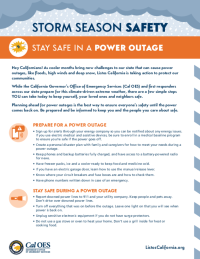
Storms that bring strong winds and flooding can also bring downed power lines and power outages. Prepare for any medical needs that rely on power and have enough water and food that doesn’t need refrigeration for every member of your household for at least three days.
Sign up for alerts through your energy company so you can be notified about power shutoffs.
If you rely on power for your health and safety, fully charge devices and backup batteries, prepare to keep medicines cold, and medical devices charged. Have extra batteries for radios, flashlights, and other devices.
If you use electric medical and assistive devices, create a personal disaster plan with family and caregivers for how to meet your needs during a power outage.
Keep freezers and refrigerators closed. Use coolers with ice if necessary.
Use a generator outside only, at least 20 feet from doors and windows. Indoors, its poisonous exhaust can kill in minutes.
For more information, review the following in-language Safety During a Power Outage fact sheets:
Vietnamese-language fact sheet
Links in this section relate to Body
After the Storm
Body
Here are tips if you live in an area where a flooding, high winds, or debris flow (landslides, mudslides) have occurred:
Stay away from the affected flooding or debris flow area. There may be danger from additional flood surges or slides.
Listen to local radio or television stations for the latest emergency information.
Watch for flooding that sometimes follows debris flows because they may both be started by the same conditions.
Check for injured and trapped persons near the slide, without entering the direct flooding or debris flow area. Direct rescuers to their locations.
Report broken utility lines and damaged roadways and railways to appropriate authorities. Reporting potential hazards will get the utilities turned off as quickly as possible, preventing further hazard and injury.
Allow trained professionals to check the building foundation, chimney, and surrounding land for damage.
Longer-range considerations
Replant damaged ground as soon as possible since erosion caused by loss of ground cover can lead to flash flooding and additional landslides in the near future.
Seek advice from a geotechnical expert for evaluating landslide hazards or designing corrective techniques to reduce landslide risk. A professional can advise you of the best ways to prevent or reduce landslide risk, without creating further hazard.